


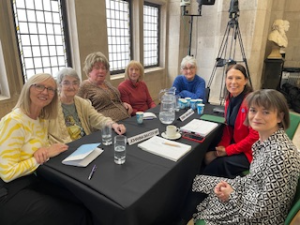
Manchester, 1st April, 2025 – On Tuesday, the Work and Pensions Select Committee convened a roundtable at Manchester Town Hall to discuss the Government’s recent decision to restrict Winter Fuel Payment eligibility and initiate a pensions review. This move has sparked significant debate regarding pension adequacy and the broader implications for pensioner poverty in the UK.
The inquiry aims to delve into several critical questions: Which groups are most affected by these changes? What are the health impacts? How do the State Pension and other pension-age benefits mitigate the risks? What role do measures like the Household Support Fund play? Additionally, the inquiry seeks to understand how these issues vary across the devolved nations.
Three of our Age Friendly Salford participants, Susan Watkins, Irena Gradkowska, and Christine Newens, were invited to participate in the roundtable alongside five other older people from different parts of Greater Manchester. Susan remarked, “Who’d have thought, by joining Age Friendly Salford, I would be sitting here providing my views and experiences to the Select Committee.” Christine added “It’s been a privilege to be part of this conversation and have the opportunity to bring to light the daily struggles older people face.”
Their contributions provided valuable insights into the real-life challenges faced by pensioners in the region. Participants at the roundtable shared their experiences, shedding light on the impact of these restrictions during the winter of 2024/25. Discussions highlighted the complexity of the current welfare system, which often prevents individuals from applying for benefits such as Pension Credit—a gateway to other potential entitlements. Barriers to accessing information and support were also noted, particularly for those who are not digitally connected or lack the skills to navigate online resources.
For many, not knowing where to go or who to speak to poses a significant challenge when seeking information or support in person. This is especially true for individuals with sensory impairments or communication difficulties, such as those following a stroke. Television programmes such as Martin Lewis’s Money Saving Expert have proven helpful in providing information on schemes that can save money, yet many still struggle to access these resources.
The roundtable also addressed the issue of ill health and the side effects of certain medications, which can affect a person’s ability to stay warm. The type of property an older person lives in was another point of concern; for example, tenants in typical terraced houses often face higher heating costs compared to those in smaller properties like flats. Some tenants in social housing reported being forced to pay higher electricity rates via key-cards due to outstanding balances left by previous tenants.
The consensus was clear: the phrase “heating or eating” is not just a slogan but a daily reality for many. Participants shared how they have adapted their lifestyles to cope, such as going to bed early to stay warm, wearing more layers, and making a conscious effort to move around their homes. Simple chair-based exercises and accessing local warm spaces, including libraries, were among the strategies employed to manage the cold.
The roundtable provided valuable insights into the challenges faced by pensioners in the UK, highlighting the need for a more accessible and supportive welfare system. As the inquiry continues, the Select Committee aims to gather further evidence to address these pressing issues and ensure that pensioners receive the support they need.
For more information on this inquiry, please visit Work and Pensions Committee – Summary – Committees – UK Parliament

